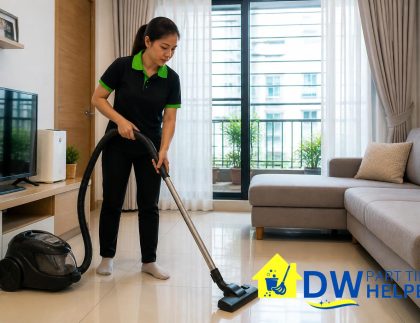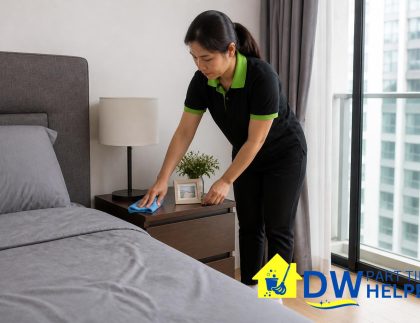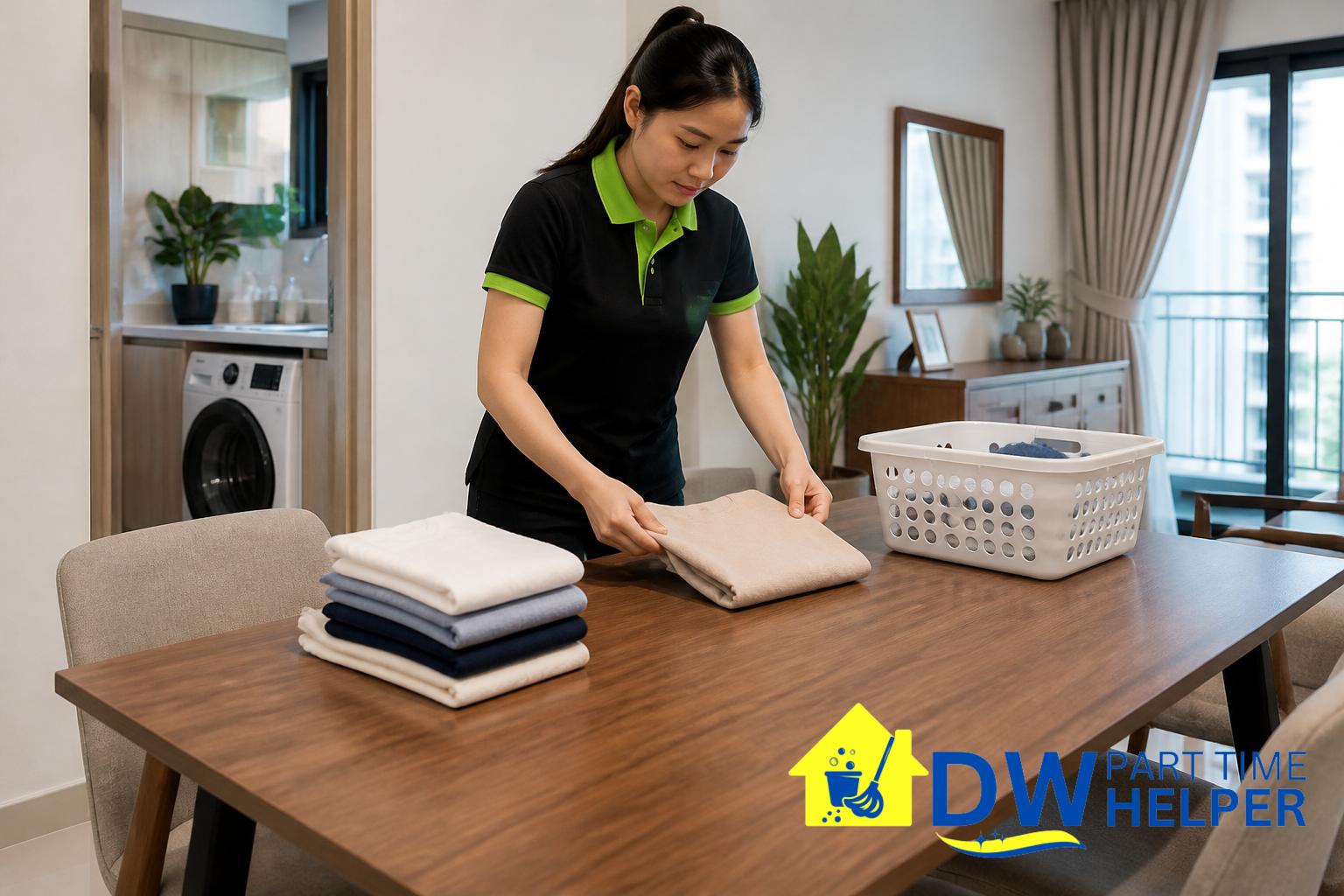
Professional home cleaning helps reduce the way dust, crumbs, pet hair and everyday grime move from one room to another. In Singapore homes, this matters because compact layouts, shared walking paths and frequent daily use can make a small amount of dirt travel quickly across the whole unit. A well-planned cleaning routine is not just about making each room look neat; it is also about controlling where dirt starts, how it moves and how it is removed before it spreads.
Why dirt spreads so easily in busy homes
Dirt rarely stays in one place. It can be carried on shoes, socks, cleaning tools, hands, clothing and even on air movement from fans or open windows. In many Singapore households, the same corridor may lead from the entrance to the living room, bedrooms and kitchen, which means one dirty area can affect several others if cleaning is done in the wrong order.
Common examples include dust from ceiling fans settling on floors, food crumbs being tracked from the dining area into bedrooms, and bathroom moisture carrying grime onto adjacent hallway surfaces. Professional home cleaning takes these movement patterns into account so that cleaning removes dirt rather than redistributing it.
The importance of cleaning from cleaner areas to dirtier areas
One of the simplest ways to prevent cross-contamination between rooms is to clean in a planned sequence. A professional cleaner will usually begin with less dirty spaces and move towards areas that collect more soil, such as the kitchen, bathrooms and entryway. This avoids carrying heavier dirt back into rooms that were already cleaned.
This method is especially useful in residential cleaning services because it helps preserve the result of earlier work. For example, if a bedroom is vacuumed after the kitchen has been mopped, dust and moisture can be introduced again through the same mop or cloth. A disciplined cleaning order supports better housekeeping and a more consistent finish across the home.
Using separate tools for different rooms and surfaces
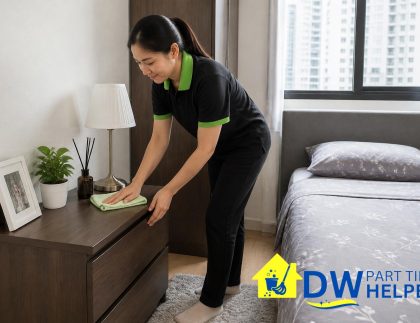
Professional home cleaning often relies on separating tools by task or room. Microfibre cloths, mop heads and vacuums can all transfer dirt if they are used across multiple spaces without proper rinsing or replacement. A cleaner who manages tools carefully reduces the risk of moving grime from the bathroom into the living room, or from the kitchen into the bedroom.
In practice, this may mean using different cloths for toilet surfaces, kitchen counters and general dusting. It may also mean changing mop water when it becomes visibly dirty. These small steps make a noticeable difference in keeping one room from affecting another, particularly in homes where part time cleaning is arranged on a weekly or recurring basis.
Containment during dusting, sweeping and vacuuming
Some cleaning methods can stir up dirt before they remove it. Dry sweeping, for instance, may push fine dust into corners or across adjoining floors if it is not handled properly. Likewise, feathering dusters and old cloths can move particles from one surface to another instead of lifting them away.
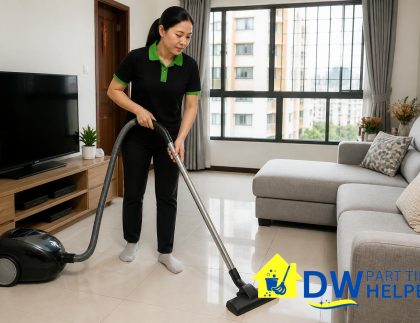
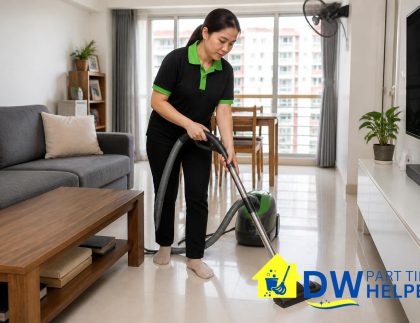
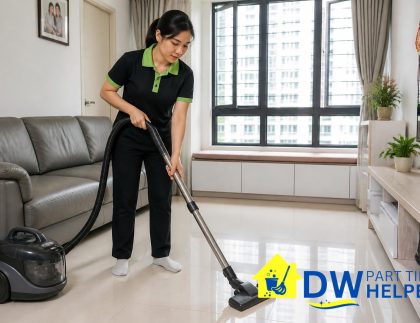
Professional cleaners usually work with methods that limit this spread. Microfibre cloths are useful because they trap dust more effectively than rougher materials, while vacuuming with suitable attachments can reduce loose debris before mopping begins. In Singapore homes with tiled, vinyl or laminated floors, this sequencing is important for preventing dirt from being carried through corridors and living spaces.
Paying attention to entry points and high-traffic routes
The entrance, hallway and main passageways are often the main routes through which dirt enters and spreads. Shoes may carry in fine grit from outside, and once that debris reaches the central areas of the home, it can be transferred into bedrooms and other rooms by foot traffic. Professional home cleaning gives these areas extra attention because they influence the cleanliness of the rest of the household.
Regular cleaning of mats, floor edges, skirting and door thresholds can help reduce the amount of dirt moving further indoors. In homes with children or pets, this is even more relevant because movement tends to be faster and less predictable. A cleaner who understands traffic patterns can help the household focus effort where it prevents the widest spread.
How damp cleaning methods help control fine dust
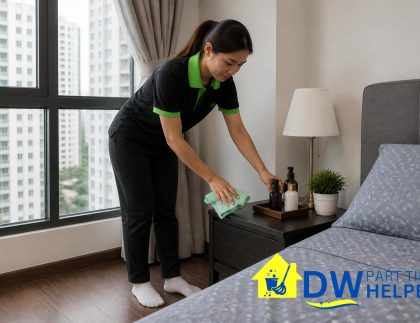
When done properly, damp wiping and mopping help capture dust instead of sending it back into the air. This is useful for surfaces such as tables, shelves, window ledges and bathroom fittings, where fine particles can settle and then shift to other rooms through airflow or contact.
That said, professional home cleaning is not about using more water everywhere. Excess moisture can leave streaks, make floors unsafe and transfer dirt between cloths or mop heads. The key is controlled damp cleaning with fresh, suitable materials so that dirt is lifted from one area and not spread to the next.
Why regular schedules work better than occasional deep cleaning alone
Even a thorough deep clean will not stop dirt from returning if the home is not maintained regularly. In many Singapore households, weekly cleaning or recurring part time maid support helps keep surface dirt low enough that it does not build up and travel from room to room. When dust and crumbs are removed before they accumulate, there is less opportunity for them to spread widely.
This is one reason many homeowners, tenants and families choose ongoing home cleaning services rather than waiting until the property looks visibly dirty. A regular schedule supports better control over everyday mess, especially in busy homes with working adults, school routines, guests or shared living spaces.
What professional cleaners typically do differently
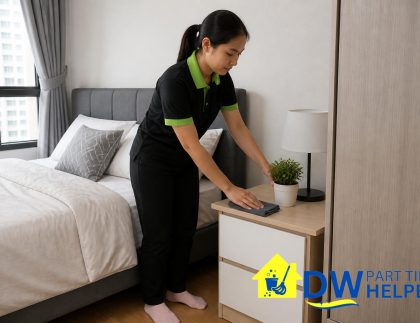
Professional cleaners are usually more systematic than casual household cleaning. They may start by clearing clutter, then dusting from top to bottom, then vacuuming and mopping in a planned order. They also pay attention to cloth changes, water replacement and the handling of high-touch areas such as door handles and switches.
These practices matter because dirt spreads not only through visible debris but also through contact. A cleaner who works methodically is less likely to brush dust from one surface onto another or carry wet grime from a bathroom to a bedroom. That is one of the main practical benefits of arranging part time cleaning services in Singapore.
If you would like help setting up a suitable cleaning arrangement for your home, you can WhatsApp DW Part Time Helper Singapore to discuss the property type, cleaning scope, frequency and any special requirements for your household.
Conclusion
Professional home cleaning prevents dirt from spreading between rooms by using a clear sequence, the right tools, careful room-by-room handling and regular maintenance. Instead of simply making individual spaces look tidy, a good cleaning routine helps control how dirt enters, moves and settles across the home. For Singapore households, this makes cleaning more efficient, more consistent and easier to maintain over time.
Choose DW Part Time Helper Singapore
DW Part Time Helper Singapore is a reputable company based in Singapore, specializing in providing reliable and efficient home cleaning services. Given the growing demand for assistance with household chores and daily tasks, having a reliable and trustworthy part-time helper who can do one time cleaning or weekly cleaning has become essential for many individuals and families.
DW Part Time Helper Singapore understands this need and strives to connect clients with our team of skilled and experienced part time helpers, part time maids, or part time cleaners who can assist with various house cleaning tasks. Our team of dedicated part-time helpers is committed to delivering high-quality service to ensure customer satisfaction. Feel free to explore our articles, projects, and reviews for a deeper understanding of our company. If you have any questions, please don’t hesitate to contact us via WhatsApp at +65 8241 0032.
Frequently Asked Questions
Why does dirt move from one room to another so quickly?
Dirt can travel on shoes, socks, hands, cleaning cloths and airflow from fans or open windows. In homes with connected walkways, one dirty area can affect several nearby rooms if cleaning is not done carefully.
Is vacuuming better than sweeping for preventing dirt spread?
In many homes, vacuuming is more effective because it removes loose dust and debris with less chance of pushing particles around. Sweeping can still be useful, but it should be done carefully to avoid moving fine dirt into other rooms.
How often should a home be cleaned to reduce dirt spreading?
For many Singapore households, weekly cleaning is a practical way to manage dust and everyday mess before it builds up. Homes with children, pets or heavy foot traffic may benefit from more frequent cleaning support.